The future of work may not be a battle between humans and AI. It may be the emergence of an entirely new workforce that never appears on an organizational chart.
For most of modern business history, company growth followed a familiar formula.
More customers required more employees. More employees required more managers. More managers required more processes. Headcount became the visible indicator of organizational capability.
Investors tracked it. Founders celebrated it. Markets often interpreted it as evidence of momentum.
But a different operating model is beginning to emerge.
Across startups and technology companies, an increasing share of work is being performed by systems that never appear on payroll reports, employee directories, or organization charts.
Research agents gather information. Sales agents enrich leads. Support agents handle routine inquiries. Operational agents generate reports, summarize meetings, monitor competitors, and automate repetitive workflows.
These systems are not employees.
Yet they increasingly contribute to business output.
The result is the rise of what can be described as an invisible workforce.
For decades, organizational capability was largely constrained by human capacity.
Need more customer support?
Hire support representatives.
Need more research?
Hire analysts.
Need more sales activity?
Hire account executives.
The relationship between growth and hiring was straightforward. As work increased, headcount increased.
This model worked because human labor was the primary mechanism through which organizations converted strategy into execution.
Every new capability required additional people.
Every new department required additional management.
Every expansion of operations increased organizational complexity.
The invisible workforce challenges that equation.
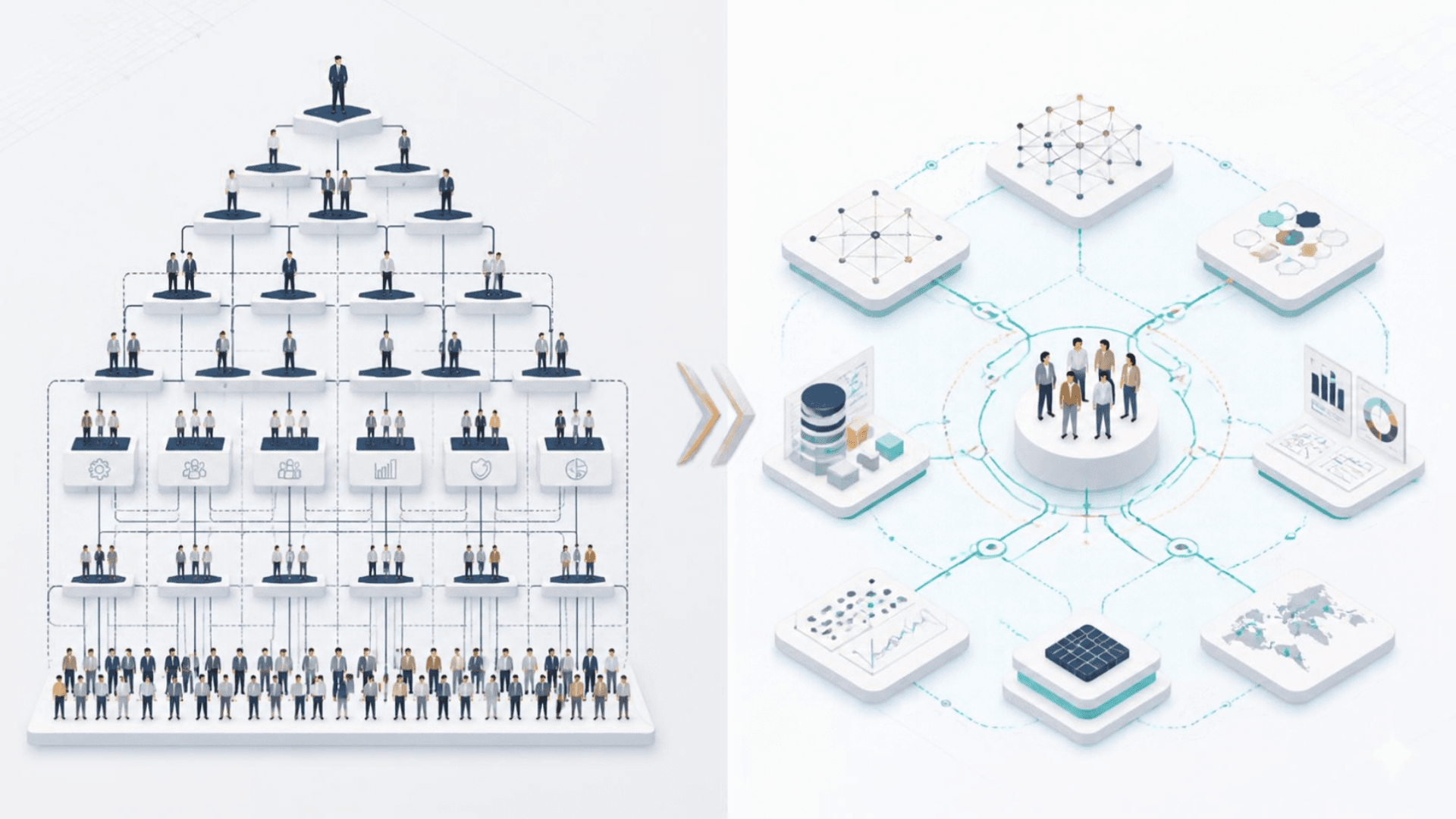
Illustration: Traditional headcount scaling versus capability-based scaling.
Founders often ask whether AI will replace jobs.
The more useful question may be whether companies will continue measuring themselves primarily through employee count.
Consider two hypothetical startups.
Startup A employs 120 people and operates using largely traditional workflows.
Startup B employs 35 people but augments nearly every function with specialized AI systems.
Both generate similar output. Both serve comparable customer bases. Both compete in the same market.
Which company is larger?
The answer becomes less obvious. One has more employees. The other may possess comparable operational capacity.
Historically, those concepts were closely connected. Increasingly, they may not be.
A company's true scale may depend less on the number of people it employs and more on the total capability it can deploy.
Traditional software follows predefined instructions. Agentic systems can pursue objectives, retrieve information, evaluate results, coordinate workflows, and execute multi-step tasks with varying levels of autonomy. As research from the McKinsey Global Institute on the economic potential of generative AI notes, digital labor and automated workflows are transforming the economics of knowledge work across modern enterprises.
This changes how organizations think about work.
A founder no longer asks:
Who should perform this task?
The question increasingly becomes:
Should this task be performed by a human, an AI system, or a combination of both?
That distinction matters because not all work creates equal value.
Repetitive execution, information gathering, monitoring, formatting, and routine analysis are increasingly becoming candidates for automation.
Human judgment, accountability, creativity, relationship-building, and strategic decision-making remain significantly harder to automate reliably.
The future organization may divide work according to strengths rather than job descriptions.
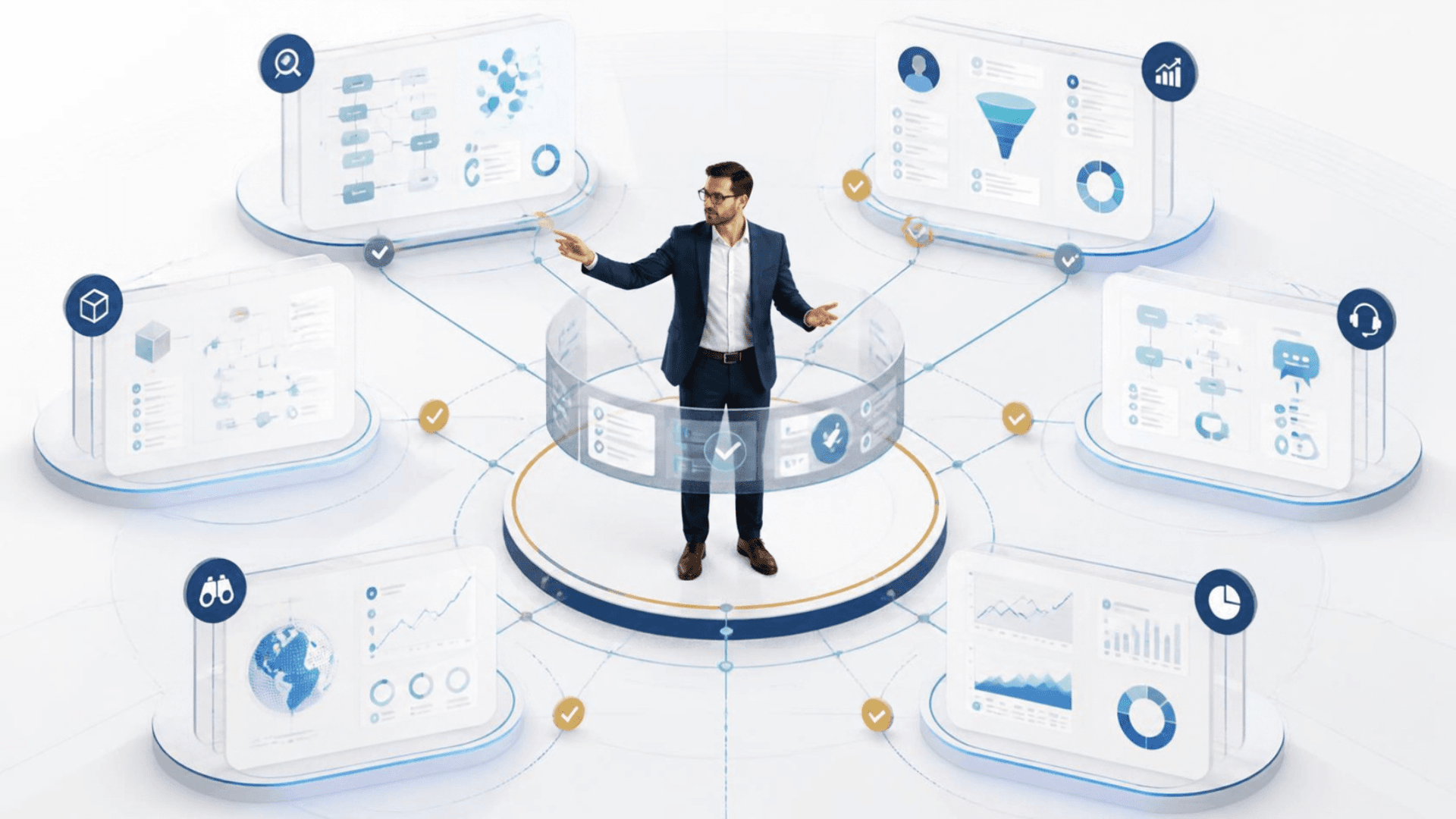
Illustration: Humans directing, reviewing, and orchestrating AI-driven execution.
One of the biggest misconceptions surrounding AI is that fewer employees automatically means less opportunity for humans.
History suggests technological shifts often change work before they eliminate it.
The invisible workforce may create new responsibilities rather than simply removing existing ones.
Employees increasingly become:
- Workflow designers
- Agent supervisors
- System evaluators
- Quality controllers
- Strategic decision-makers
- Cross-functional orchestrators
Instead of performing every operational task directly, workers may oversee systems performing those tasks at scale.
The skill of execution remains important. The skill of directing execution may become even more valuable.
The invisible workforce is not merely a technology trend.
It is an organizational design trend.
Founders who ignore it may find themselves competing against companies capable of operating faster, leaner, and more efficiently.
Historically, growth planning often began with hiring plans. The conversation looked something like this:
We need three analysts.
We need two researchers.
We need five support agents.
Tomorrow's conversation may sound different.
We need stronger research capability.
We need faster customer response.
We need better competitive intelligence.
The focus moves from people to outcomes. Humans remain essential, but hiring becomes only one method of acquiring capability.
While the invisible workforce offers efficiency, it introduces a new challenge.
Responsibility cannot be automated.
An AI agent can generate a report. It cannot own the consequences of a bad decision.
An AI agent can recommend a strategy. It cannot bear legal, financial, or ethical accountability.
As organizations deploy larger numbers of autonomous systems, founders must answer difficult questions:
- Who approves critical actions?
- Who validates outputs?
- Who monitors performance?
- Who is accountable when systems fail?
The organizations that succeed will not simply automate more work. They will establish clear governance around automated work.
There is another danger that receives less attention.
Organizations can become operationally dependent on systems they barely understand.
A startup may eventually rely on dozens of agents across marketing, sales, finance, operations, customer support, and product development.
Each system appears useful individually. Collectively, they may create a layer of invisible complexity.
When something breaks, identifying the source becomes difficult. When outputs conflict, determining responsibility becomes difficult. When decisions are automated across multiple systems, oversight becomes critical.
The future challenge may not be managing employees. It may be managing the interactions between hundreds of automated processes.
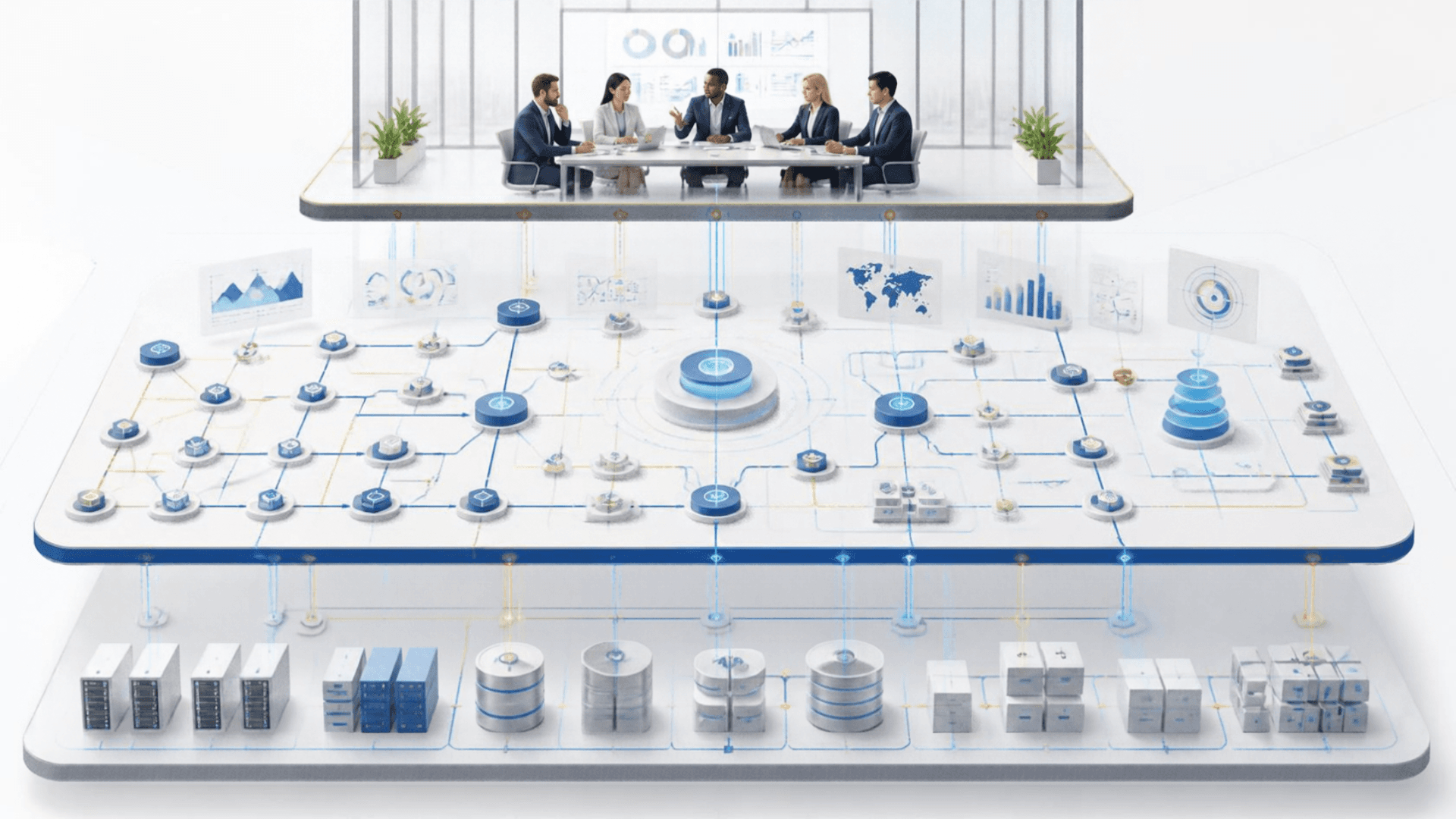
Illustration: A modern startup operating with employees, AI agents, workflows, data systems, and governance layers.
The most successful AI-native organizations may not be the ones that replace the most people. They may be the ones that redesign work most effectively. Analysis from Sequoia Capital on AI-powered software development and the future of work shows that engineering and operational teams increasingly scale leverage through autonomous development workflows.
These companies will likely:
- Automate repetitive execution
- Preserve human accountability
- Invest heavily in oversight
- Build systems around outcomes rather than departments
- Treat AI as operational infrastructure rather than a novelty
In these organizations, humans and agents are not competitors. They are components of the same operating system.
For founders thinking seriously about integrating AI agents into their operations, four questions cut through the noise.
Which workflows consume the most repetitive effort?
Look for tasks that are high-frequency, rule-based, and low-stakes for individual errors. These are the strongest candidates for automation. Data entry, report generation, lead enrichment, scheduling, and competitive monitoring are common starting points.
Which tasks require human judgment?
Strategic decisions, relationship management, ethical calls, and accountability-bearing functions should remain with people. Not because AI cannot assist, but because human ownership of consequences is essential to organizational integrity.
Where can AI increase capability without increasing complexity?
The best early automations are those that deliver clear, measurable output improvements without creating fragile dependencies. Automating a single workflow well is more valuable than deploying ten interconnected agents poorly.
What governance exists when automated systems make mistakes?
Every autonomous system will eventually produce errors. The question is not whether failures will occur -- it is whether your organization has clear protocols for identifying them, correcting them, and learning from them.
The goal is not maximum automation. The goal is maximum leverage with clear accountability.
The future of work is often framed as a contest between humans and machines.
That framing misses the more important transformation.
The defining companies of the next decade may not employ dramatically fewer people. They may simply generate dramatically more output per person.
The invisible workforce is not visible in office buildings, employee directories, or organizational charts.
Yet it is becoming an increasingly important part of how modern companies operate.
For founders, the challenge is not deciding whether AI agents belong in the workforce. The challenge is learning how to build organizations where humans and agents create value together.
The companies that solve that problem first may discover that the true measure of scale is no longer headcount.
It is capability.
The invisible workforce refers to AI agents, automated systems, and digital workflows that perform meaningful business tasks without appearing on an organizational chart or payroll. These systems handle activities like research, data processing, content generation, lead enrichment, customer support routing, and competitive monitoring -- contributing to output in ways that traditional headcount metrics do not capture.
Not straightforwardly. AI agents are more likely to change the nature of work than to eliminate it wholesale. Employees who previously executed repetitive tasks may transition into roles that involve designing, supervising, and evaluating the automated systems performing those tasks. The shift is from doing to directing -- and directing at scale tends to create new categories of demand for skilled judgment.
Because the competitive gap is widening. Startups that integrate AI agents effectively can operate faster and leaner than those that do not. A company with 35 people and well-designed AI systems may match the operational output of a company with 120 employees using traditional workflows. Founders who delay this transition risk competing against organizations that have already restructured around it.
An AI-native company is one that treats AI as foundational operational infrastructure rather than an add-on feature. Instead of retrofitting AI tools into existing workflows, AI-native companies design their processes from the ground up around the assumption that both humans and agents will contribute to execution. Human accountability remains central, but AI handles the bulk of repetitive, scalable work.
AI Founders Talk publishes original analysis for founders, operators, revenue leaders, and technology professionals navigating the AI era.
Our goal is not to predict the future but to help leaders make better decisions as technology reshapes how organizations operate.